

While drug procurement tenders have increased and their total value has risen by 20%, competition is declining. The share of single-bidder procurements has reached 94%. Why are these auctions increasingly taking place without competition?
The number of public procurement tenders is growing, but the lion’s share continues to involve only a single participant. An analysis of public procurement data for the elapsed period of 2026 was presented at the XIV “Medicines of Russia – Towards an Interdisciplinary Dialogue: From Quality of Pharmacovigilance to Quality of Life” Partnering Forum.
During the first eight months of 2026, the total volume of tenders in terms of the initial maximum contract price (IMCP) rose by 20% compared to January–August 2025. Meanwhile, the total number of completed auctions grew by 4%, reported Ekaterina Zadonskaya, CEO (Chief Executive Officer) of Cursor Marketing LLC (Limited Liability Company), according to a correspondent from Pharmvestnik (FV).
Regarding failed procurements, the overall picture looks favorable compared to the same analytical period last year. While in 2025, the total share of failed auctions stood at 27% in monetary terms, it dropped to 22% this year. In terms of quantity, a significant portion of tenders 39% failed during the first eight months of last year, compared to 36% this year, Zadonskaya explained.
“There are quite a few reasons why auctions are declared failed. The vast majority of tenders yield no results due to a lack of submitted bids from participants,” the analyst noted. The overwhelming majority consists of auctions with only a single participant admitted to the competitive bidding process. In 2025, their share in value terms was 88%, rising to 94% in 2026; in quantitative terms, these figures were 75% and 88%, respectively. Under the national regime regulations, the share of such single-bidder procurements is near 100% in both value and quantity.
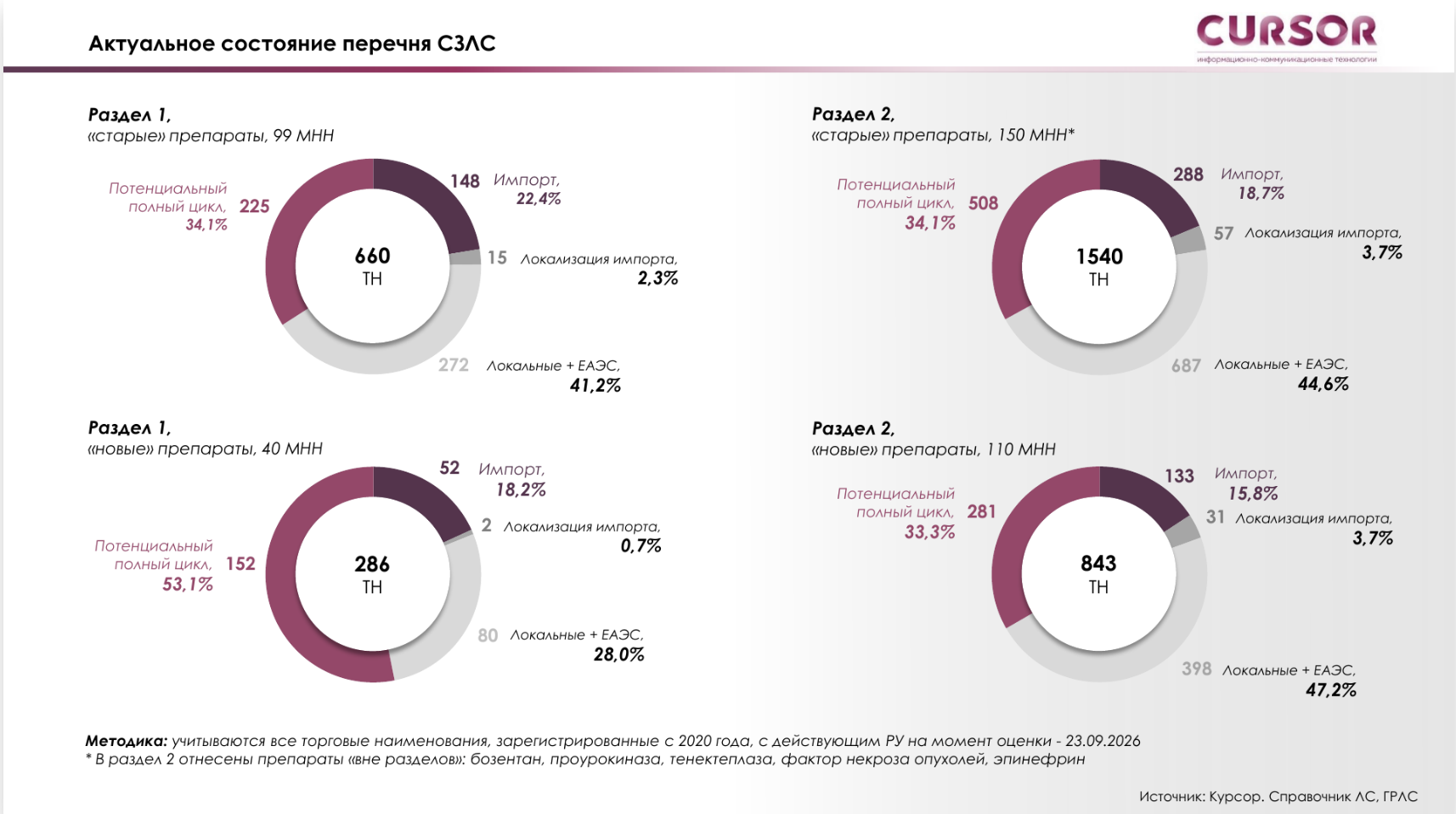
Medicines with potential full-cycle manufacturing occupy slightly more than a third of the List of Strategically Significant Medicines (SSML). Moreover, in Section I of the list, they account for more than half of the newly included medications.
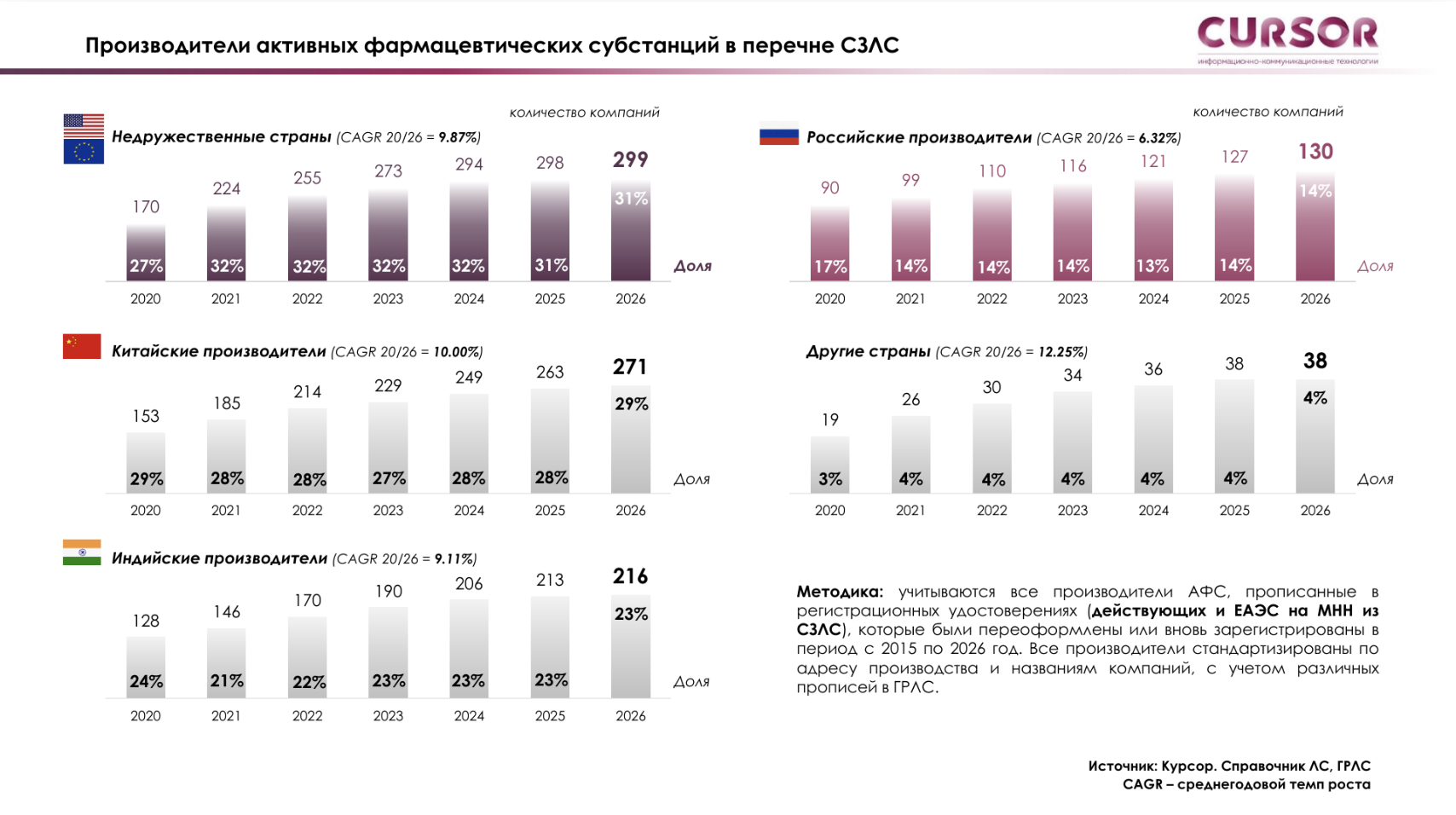
The market share distribution among manufacturers of active pharmaceutical ingredients (APIs) for drugs included in the SSML remained virtually unchanged. The highest average annual growth rate is being demonstrated by APIs imported from other countries.
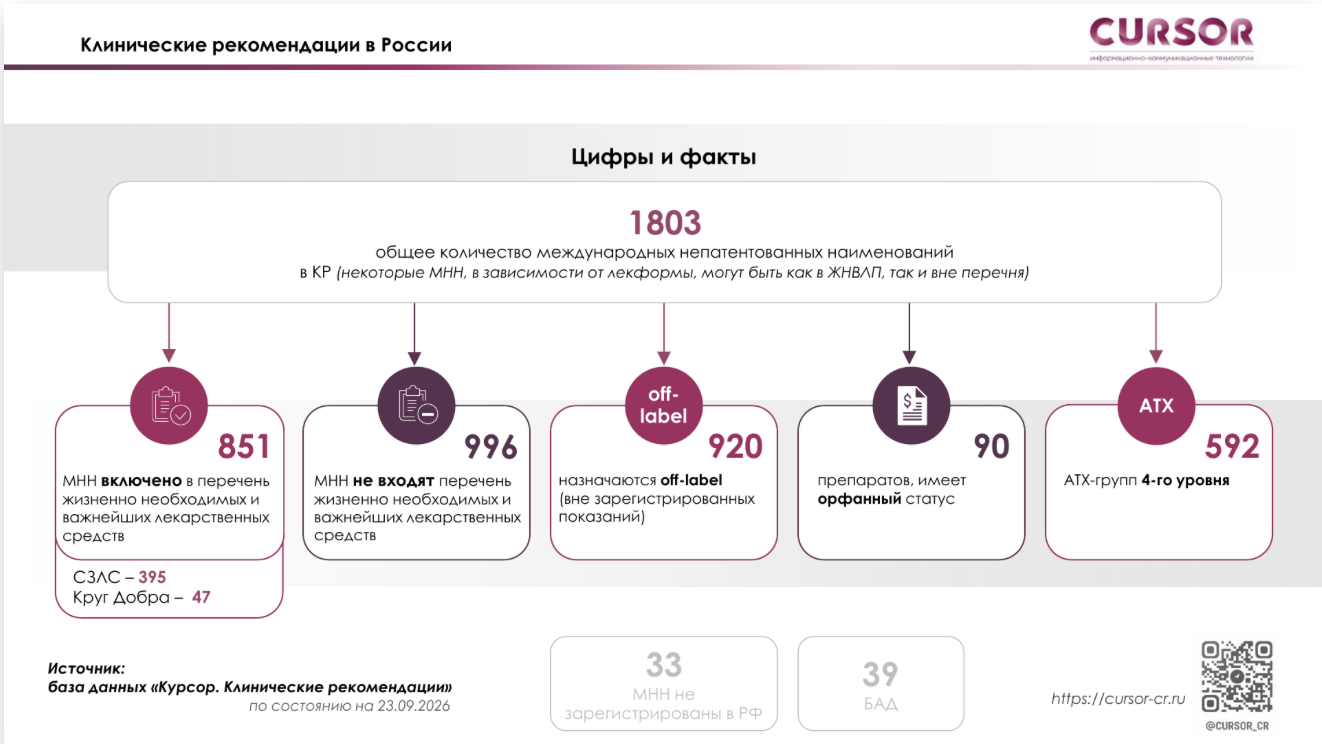
The company also analyzed the list of medications included in Russia’s clinical guidelines. This list comprises 1,803 international nonproprietary names (INNs), of which 851 INNs are included in the Vital and Essential Drugs List (VEDL). Among these, 395 INNs are part of the SSML, and 47 are included in the list of medications procured by the “Circle of Kindness” Foundation (a state-run charity fund for children with rare life-threatening and chronic conditions).
Source: Pharmvestnik, September 25, 2026.


